SPEAKERS |
Keynote Speaker Ⅰ
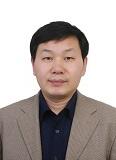
Prof. Wanyang Dai
Nanjing University, China
Speech Title: AGI Business Model and Digital Economy via Quantum Transformer with Spatial Diffusion
Abstract:
To support the online pricing and decision-making for artificial general intelligence (AGI) oriented business model and digital economy, we establish a generalized quantum transformer (called Q-Transformer) with the capability of prediction and adaptive feedback control interaction through big model regression. Our Q-Transformer consists of quantum encode-decode coupling processes, which corresponds to a forward-backward coupling spatial diffusion model whose drift parameter vectors can be mapped to different real-world attentions for AGI. This newly proposed Q-Transformer is integrated into our previously developed quantum cloud computing platform as its smart federated learning engine, which is supported by our recently designed and justified neutral atom quantum computer. The main purpose to develop such an integrated big model platform system is to conduct high-dimensional spatial AI online pricing and decision-making for real-world IoT/IoV via 6G such as low-attitude economy, which involve big data managements and heavy numerical computations. Specific applications such as multiple objective based robot routing, resource allocation, and dynamic pricing will be given. Related optimization and equilibrium policies will be trained with numerical simulations.
Bio:
Wanyang Dai is a Distinguished Professor in Mathematics Department of Nanjing University, Chief Scientist at Su Xia Control Technology, President and CEO of U.S. based (blochchain and quantum computing) SIR Forum (Industial 6.0 Forum), a Special Guest Expert in Jiangsu FinTech Research Center, President of Jiangsu Probability & Statistics Society, Chairman of Jiangsu Big Data-Blockchain and Smart Information Special Committee, Chief Scientist at Depths Digital Economy Research Institute, and Editor-in-Chief of Journal of Advances in Applied Mathematics, where his research includes stochastic processes related optimization and optimal control, admission/scheduling/routing protocols and performance analysis/optimization for various projects in BigData-Blockchain oriented quantum-cloud computing and the next generation of wireless and wireline communication systems, forward/backward stochastic (ordinary/partial) differential equations and their applications to queueing systems, stochastic differential games, communication networks, Internet of Things, financial engineering, energy and power engineering, etc. His “influential” achievements are published in “big name” journals including Probability in the Engineering and Informational Sciences, Quantum Information Processing, Operational Research, Operations Research, Computers & Mathematics with Applications, Communications in Mathematical Sciences, Journal of Computational and Applied Mathematics, Queueing Systems, Mathematical and Computer Modeling of Dynamical Systems, etc. His researches are awarded as outstanding papers by various academic societies, e.g., IEEE Top Conference Series, etc. He received his Ph.D. degree in applied mathematics jointly with industrial engineering and systems engineering from Georgia Institute of Technology, Atlanta, GA, U.S.A., in 1996, where he worked on stochastics and applied probability concerning network performance modeling and analysis, algorithm design and implementation via stochastic diffusion approximation. The breakthrough results and methodologies developed in his thesis were cited, used, and claimed as “contemporaneous and independent” achievements by some other subsequent breakthrough papers that were presented as “45 minutes invited talk in probability and statistics” in International Congress of Mathematicians (ICM) 1998, which is the most privilege honor in the mathematical society. The designed finite element-Galerkin algorithm to compute the stationary distributions of reflecting Brownian motions (weak solutions of general dimensional partial differential equations) is also well-known to the related fields.
Keynote Speaker Ⅱ
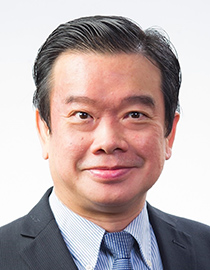
Prof. SIAU Keng Leng
Singapore Management University, Singapore
Speech Title: Industry 5.0 - Opportunities and Challenges in Human-Robot Collaboration
Abstract:
Industry 5.0, the next phase of the industrial revolution, represents a transformative shift focusing on the integration of advanced AI-powered robotic technologies and human intelligence. Emphasizing collaboration between humans and robots, this new paradigm also focuses on human progress and well-being. Industry 5.0 opportunities include enhanced productivity, improved workplace safety, and potential for innovation through human-robot collaboration and teamwork. Nevertheless, there are challenges such as humanoid robot adoption, workforce education and training, job displacement and replacement, and ethical considerations surrounding the future of work and the future of humanity. This talk will look at the opportunities and challenges in human-robot collaboration and how to balance the opportunities and challenges to foster a future that enhances human well-being while driving industrial progress.
Bio:
Professor Siau is the Lee Kong Chian Professor of Information Systems at the School of Computing and Information Systems, Singapore Management University. From June 2021 to June 2024, he was the Head of the Department of Information Systems and Chair Professor of Information Systems at the City University of Hong Kong (CityU). He was also an Affiliated Chair Professor of the School of Data Science at CityU and an Affiliated Professor of the CityU Academy of Innovation. From 2012 to 2021, he was Head (“Business Dean” equivalent) of the AACSB accredited Business Program at the Missouri University of Science and Technology (Missouri S&T). Before joining Missouri S&T, he was the Edwin J. Faulkner Professor and Full Professor of Management at the University of Nebraska-Lincoln. Professor Siau received his Ph.D. in Business Administration with a specialization in Management Information Systems from the University of British Columbia. Professor Siau has more than 350 academic publications. According to Google Scholar, he has a citation count of more than 25,000. His h-index and i10-index, according to Google Scholar, are 79 and 210 respectively. He is also on the Stanford University list of the world’s top 1% most-cited scientists. Professor Siau is an AIS Distinguished Member–Cum Laude. He is a recipient of the prestigious International Federation for Information Processing (IFIP) Outstanding Service Award in 2006, IBM Faculty Awards in 2006 and 2008, IBM Faculty Innovation Award in 2010, AIS Sandra Slaughter Service Award in 2019, AIS Award for Outstanding Contribution to IS Education in 2019, AIS Fellow Award in 2022, and AMCIS Outstanding Leader Award in 2023.
Keynote Speaker Ⅲ
Prof. Chuan Zhan Chongqing Technology and Business University, China Speech Title:A Financial Risk Prediction Model for Real Estate Firms Based on Feature Selection and Cost-Sensitivity Abstract: Bio: Dr. Zhan Chuan, a computer science Ph.D. from the University of Electronic Science and Technology of China, is a Master supervisor and Dean at the International Business School in Chongqing Technology and Business University. Professor Zhan has enriched his academic experience as a visiting scholar at the Sobey School of Business, Saint Mary's University in Canada. He is also actively involved in many professional associations, including the Vice President of the Chongqing E-commerce Association and an Executive Director of the Chongqing Computer Association. His contributions extend to his role as Director of the Laboratory of Business Logistics and E-commerce under the Chongqing Municipal Commission of Commerce, and as Director of the Big Data Analysis and Decision Institute within the Chongqing Laboratory of E-commerce and Supply Chain System. Additionally, he is a member of the innovation team for "Management Decision and Support System" in Chongqing and a member of the Chongqing Western Returned Scholars Association. Professor Zhan has a solid theoretical foundation, his research interests encompass intelligent business, business big data analysis, data mining, innovative applications of the Internet of Things(IoT), and data-driven managerial decision-making. He has directed or participated in over 20 national and provincial research projects, authored a book and a textbook, filed for 7 invention patents with 2 granted, and published nearly 50 papers in notable journals, including 2 indexed in Science Citation Index (SCI) and 5 in Engineering Index (EI). His practical expertise includes leading IT consulting and innovation projects for e-commerce businesses and government agencies, enhancing the field with his insights into intelligent business strategies and data analytic. |
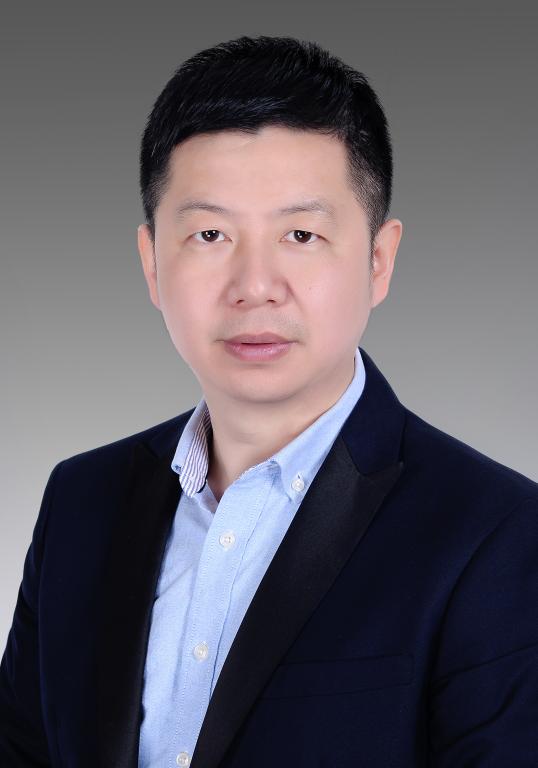
Keynote Speaker IV
Assoc. Prof. Alton Chua Yeow Kuan Nanyang Technological University, Singapore Speech Title: The Collaborative Economy: Current Research, Opportunities and Challenges Abstract: As an innovative economic and cultural force, the sharing economy is underpinned by three defining characteristics, namely, digital platforms being a key driver, peer-to-peer operations where users can be both service providers and consumers, and the underlying economic logic being one of access rather than ownership. Drawn from a corpus of research articles on sharing economy published in the last decade, this talk identifies a number of novel research directions where e-Business scholars could pursue. Additionally, opportunities for collaboration with like-minded scholars are also highlighted. Bio: Alton Chua is Associate Professor at the Wee Kim Wee School of Communication and Information, Nanyang Technological University. Between 2011 and 2014, he served as Program Director of the Master of Science (Information Systems), and thereafter till 2021 as Associate Chair (Research).
|